Introduction
The opioid epidemic has emerged as one of the most devastating public health crises of the 21st century, claiming hundreds of thousands of lives across the globe. Among all opioids, fentanyl stands out for its unprecedented potency up to 50 times stronger than heroin and 100 times stronger than morphine making it both a cheap and deadly option in illicit drug markets [1]. While the crisis is rooted in complex socio-economic and medical factors, it has increasingly become entangled in geopolitics. The United States accuses China of serving as a primary source of fentanyl precursors, while Beijing counters that America’s addiction problem is domestically driven [2,3]. This blame game now sits at the intersection of health, trade, and diplomacy.
The Global Opioid Crisis in Context
The opioid crisis has reached alarming proportions worldwide, with the United States at its epicenter. In 2023 alone, nearly 100,000 overdose deaths were recorded in the U.S., and more than two-thirds were linked to synthetic opioids such as fentanyl [4]. The crisis, however, is not confined to North America. Canada reported almost 7,000 opioid-related deaths in the same year, with fentanyl implicated in the majority [5]. Across the European Union, around 8,500 deaths were recorded, though traditional opioids like heroin still dominate in many regions [6]. In China, while large-scale fentanyl abuse is less documented, prescription opioid misuse remains a concern [7]. The global trajectory reflects a shift from prescription drug dependence in the early 2000s, to heroin dominance in the 2010s, and now to synthetic opioids cheaper, deadlier, and easier to traffic across borders [8].
As shown in Figure 1, the United States remains the epicenter of the global opioid crisis, with approximately 100,000 opioid-related deaths in 2023, nearly 70% of which were attributed to fentanyl or other synthetic opioids. Canada, though smaller in population, experienced a disproportionately high burden, with around 7,000 deaths, more than four-fifths linked to fentanyl. The European Union recorded an estimated 8,500 opioid-related deaths, where fentanyl accounted for roughly 40%, reflecting a slower but growing penetration of synthetic opioids into European markets. In contrast, China reported limited prevalence of fentanyl-related mortality, with opioid misuse largely associated with prescription drugs. These regional variations underscore the shifting dynamics of the epidemic, with fentanyl’s dominance most visible in North America.
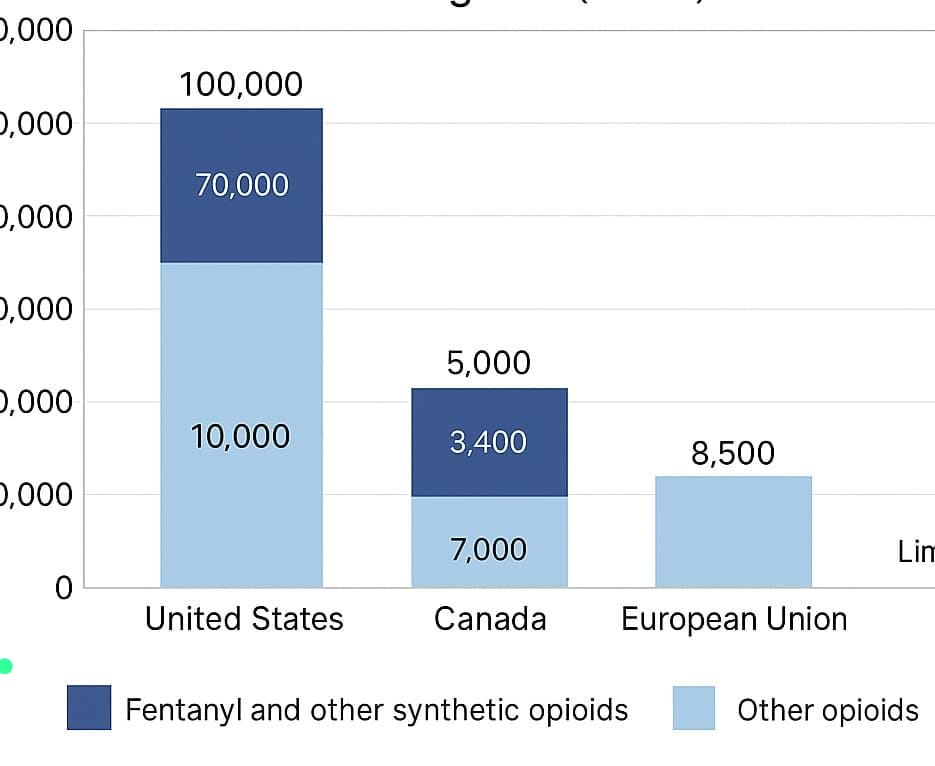
Figure 1. Comparative annual opioid-related deaths in selected regions, 2023.
The chart illustrates opioid-related mortality in the United States, Canada, the European Union, and China. Dark-colored segments represent deaths linked to fentanyl and other synthetic opioids, while light-colored segments show deaths from other opioids.
U.S. Accusations Against China
The United States has consistently accused China of being a central player in fueling the opioid crisis by enabling the production and export of fentanyl and its chemical precursors. Beginning in the mid-2010s, U.S. law enforcement agencies, including the Drug Enforcement Administration (DEA), highlighted Chinese chemical firms as primary suppliers of raw materials used by Mexican cartels to manufacture fentanyl [9]. The Department of Justice (DOJ) has unsealed indictments against multiple Chinese nationals and companies for intentionally shipping controlled substances or precursors to the U.S. market [10]. In parallel, the U.S. Treasury Department has imposed sanctions on Chinese entities believed to be complicit in the illicit opioid trade [11].
The Trump administration escalated these measures in 2025 by signing Executive Order 14195, which imposed a 10% tariff on Chinese imports, explicitly justified as a tool to curb fentanyl trafficking [2]. This tariff was later raised to 20%, accompanied by public statements that China was “incentivizing” and “subsidizing” its chemical exporters to continue the trade [12]. These actions reflect a framing of the fentanyl crisis not just as a public health disaster but as a matter of national security and economic warfare, with China cast as a primary adversary.
China’s Response and Counter-Narrative
China has firmly rejected U.S. accusations, framing them as politically motivated and deflecting attention from America’s domestic failures in addressing drug demand. Chinese officials argue that the opioid epidemic is fundamentally a U.S. problem, driven by over-prescription, social inequality, and demand for illicit substances [13]. In 2019, Beijing took significant regulatory steps by scheduling all fentanyl-related substances, making China one of the first countries to implement blanket controls on fentanyl analogues [14]. Despite this, U.S. agencies claim that enforcement has been uneven and that Chinese producers have adapted by shifting to precursor sales.
China also points to its own history of suffering during the 19th-century Opium Wars as evidence that it takes drug control seriously, and it accuses the U.S. of hypocrisy in externalizing blame [15]. Moreover, Beijing emphasizes that American pharmaceutical companies—through aggressive opioid marketing and prescription practices—ignited the epidemic long before fentanyl emerged as a dominant threat [16]. Chinese state media has further characterized U.S. actions, including tariffs and sanctions, as an extension of the broader trade war, suggesting Washington is weaponizing the opioid crisis to exert economic pressure [17]. This counter-narrative highlights the deep mistrust that now permeates both health diplomacy and great-power relations.
The Trade–Drug Nexus: Tariffs, Sanctions, and Escalation
The fentanyl crisis has increasingly become embedded in the broader U.S.–China trade conflict, turning a public health issue into a geopolitical and economic battleground. In early 2025, President Trump imposed a 10% tariff on Chinese imports through Executive Order 14195, explicitly citing China’s role in supplying fentanyl precursors [2]. Within weeks, this rate was raised to 20%, and later expanded to cover low-value e-commerce packages from China, a move aimed at curbing the online sale of precursor chemicals [18]. These measures represent a novel fusion of health security and trade policy, framing the opioid epidemic as a transnational threat requiring economic deterrence.
China responded with retaliatory tariffs, restrictions on the export of rare earth elements, and antitrust investigations targeting U.S. firms operating in its domestic market [19]. Analysts argue that the opioid dispute provided Washington with a politically salient justification to expand tariffs in an already tense trade war [20]. While the U.S. views such actions as necessary to disrupt the supply chain of synthetic opioids, critics contend they risk politicizing health security and entrenching divisions. Ultimately, the entanglement of trade sanctions with drug enforcement has deepened mistrust, making bilateral cooperation on fentanyl control increasingly unlikely.
The Mexico Factor and Transnational Supply Chains
While China has been portrayed as the primary external source of the fentanyl crisis, the role of Mexican drug cartels has been equally critical. According to DEA and UNODC reports, Chinese chemical suppliers export precursor substances such as NPP (N-phenethyl-4-piperidone) and 4-ANPP (4-anilino-N-phenethylpiperidine) to Mexico, where they are synthesized into fentanyl in clandestine laboratories [9,21]. Cartels, particularly the Sinaloa and Jalisco New Generation Cartel (CJNG), then traffic the finished product across the U.S. southern border using sophisticated smuggling networks [22]. This triangular supply chain, China (precursors) → Mexico (production) → U.S. (distribution) complicates efforts to assign singular blame. U.S. officials acknowledge that while China is the origin of most precursor chemicals, Mexico is the epicenter of finished fentanyl entering the U.S. market [23]. Moreover, traffickers increasingly disguise precursor shipments as legal products, making detection more difficult. International enforcement agencies have also noted the rise of “dual-use” chemicals, which have both legitimate industrial applications and illicit uses in drug synthesis [24]. Addressing the fentanyl crisis therefore requires a multilateral enforcement strategy that includes both source countries and transit hubs. Focusing solely on China risks ignoring the pivotal role of Mexico’s organized crime networks and their integration into global narcotics trade routes. As shown in Figure 2, the fentanyl supply chain is transnational in nature. Precursor chemicals such as NPP and 4-ANPP are produced and exported primarily from China, where they are often shipped under the guise of legitimate chemical trade. These precursors are then transported to Mexico, where powerful cartels, including the Sinaloa and Jalisco New Generation Cartel (CJNG), synthesize them into fentanyl in clandestine laboratories. From Mexico, finished fentanyl products are smuggled across the U.S. southern border using well-established trafficking routes, eventually entering domestic distribution networks that drive the overdose crisis. This triangular supply chain highlights why enforcement cannot focus solely on China, but must also address the critical role of Mexican cartels and the domestic demand that sustains the market.
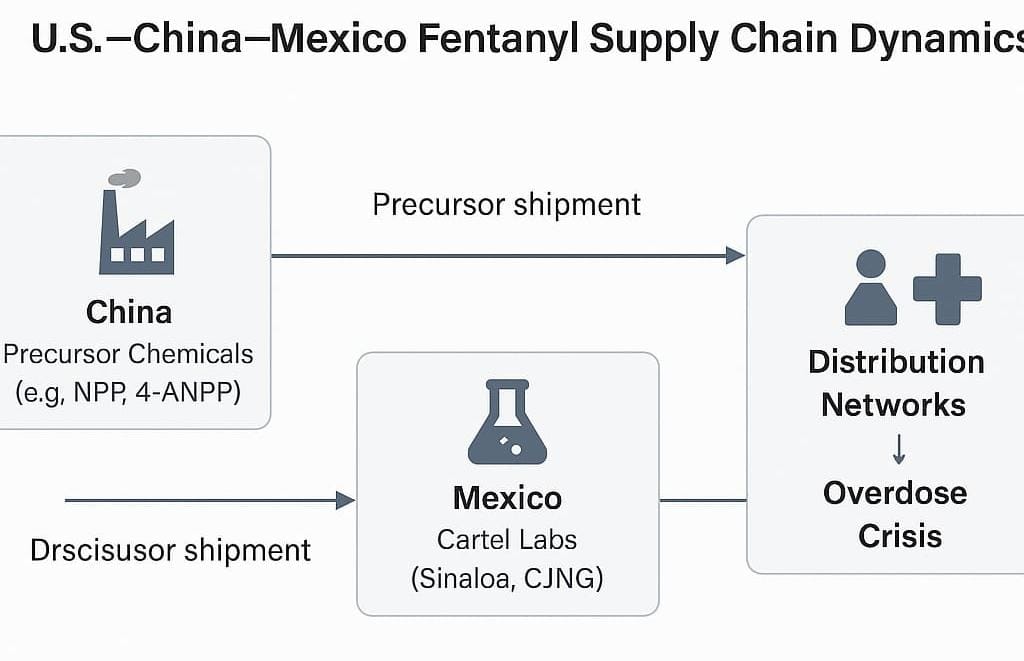
Figure 2. U.S.–China–Mexico fentanyl supply chain dynamics.
The diagram illustrates the transnational flow of fentanyl: precursor chemicals exported from China, synthesized into fentanyl in Mexican cartel laboratories, and trafficked into the United States through distribution networks that fuel the overdose crisis.
International Reactions and Global Stakes
The fentanyl crisis, though centered in North America, has drawn international concern due to its potential to destabilize global health security and trade relations. Canada, facing a parallel crisis with nearly 7,000 opioid-related deaths in 2023, has aligned with U.S. calls for tighter controls on precursor chemicals [5]. The European Union (EU) has expressed support for enhanced monitoring of synthetic opioids through the European Monitoring Centre for Drugs and Drug Addiction (EMCDDA), though fentanyl remains less dominant in Europe compared to North America [6]. Multilateral organizations, particularly the United Nations Office on Drugs and Crime (UNODC), have emphasized the need for cross-border cooperation, noting the spread of fentanyl-like analogues to Asia and Africa [21]. Experts warn that if unchecked, the trafficking model linking China, Mexico, and the U.S. could replicate itself elsewhere, producing “next-wave” crises. At the diplomatic level, the U.S. push to frame fentanyl as a global security threat risks polarizing international consensus, particularly as some countries view Washington’s measures as politically motivated extensions of its rivalry with China [20]. Thus, the global stakes extend beyond narcotics control, touching the credibility of international health governance and great-power diplomacy.
As depicted in Figure 3, the fentanyl crisis has been progressively securitized within U.S.–China trade relations. In 2019, China implemented a blanket scheduling of fentanyl-related substances, a move initially praised by Washington. However, by 2020, the DEA identified China as the principal source of fentanyl precursors, intensifying scrutiny. The confrontation escalated in 2023, when the U.S. Department of Justice indicted 22 Chinese nationals and four Chinese pharmaceutical firms for global fentanyl trafficking.
By 2025, the dispute shifted firmly into the trade domain. In February, President Trump signed Executive Order 14195, imposing a 10% tariff on Chinese imports; this rose to 20% in March, with extensions to low-value e-commerce shipments and further sanctions on Chinese entities in April. In July 2025, the U.S. even floated the possibility of capital punishment for fentanyl traffickers, drawing sharp condemnation from Beijing. Collectively, these measures illustrate how a health crisis became entangled with tariffs, sanctions, and great-power rivalry
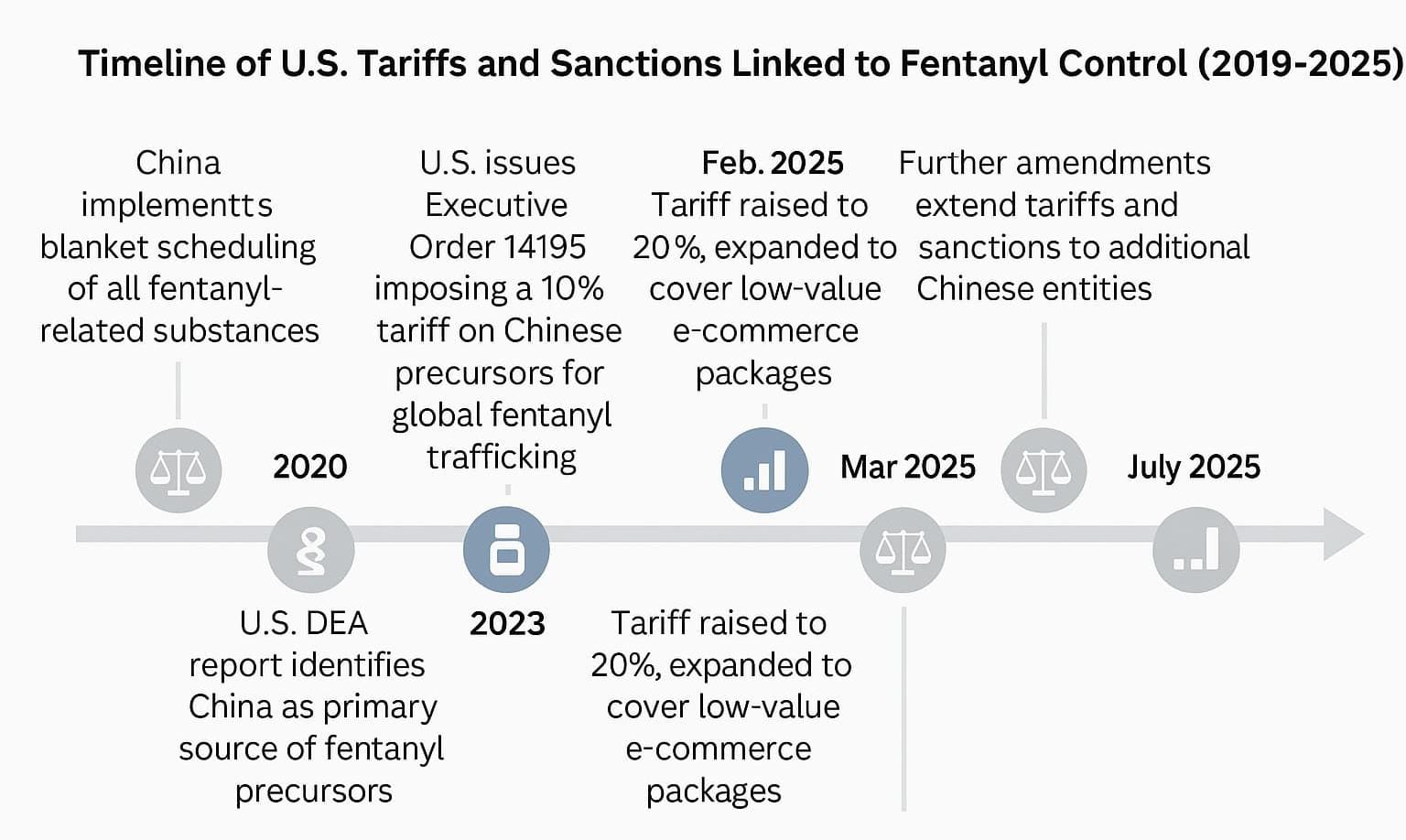
Figure 3. Timeline of U.S. trade measures, sanctions, and enforcement actions related to fentanyl control (2019–2025).
The timeline highlights key developments, including China’s regulatory measures, U.S. indictments of Chinese nationals and firms, and successive tariff escalations tied to the opioid crisis.
Public Health vs. Geopolitics: The Real Losers
At the heart of the U.S.–China blame game lie the individuals and families devastated by opioid addiction and overdose. The politicization of fentanyl control has shifted focus from public health solutions such as prevention, treatment, and harm reduction—to sanctions and tariffs with uncertain health impact [25]. Critics argue that securitizing the opioid crisis risks alienating potential partners and undermining cooperative solutions [26]. Evidence shows that overdose prevention strategies such as naloxone distribution, medication-assisted treatment (MAT), and public awareness campaigns can significantly reduce mortality [27]. However, these require transnational cooperation in tracking precursors, regulating online sales, and sharing intelligence. China emphasizes supply-side controls, while the U.S. prioritizes law enforcement and interdiction, leading to a fragmented response [14]. Meanwhile, overdose victims are often portrayed as statistics in diplomatic exchanges rather than as human beings in need of urgent intervention.
The fentanyl dispute illustrates a broader lesson: when public health crises are subsumed by geopolitical rivalries, those most affected are marginalized. Instead of framing fentanyl solely as a bilateral dispute, both powers and the international community must prioritize collaborative, evidence-based interventions. Without this shift, the global opioid crisis risks deepening, with politics overshadowing people
Conclusion
The fentanyl crisis exemplifies how a devastating public health emergency can become deeply entangled in the currents of geopolitics. The United States frames China as the primary enabler of the epidemic through the export of precursors, while China counters that America’s addiction problem is rooted in domestic demand and historical failures of regulation. Tariffs, sanctions, and diplomatic rhetoric have turned what might have been an opportunity for collaboration into another flashpoint in the U.S.–China rivalry.
Yet, as both sides trade accusations, the human toll continues to mount: tens of thousands of overdose deaths each year in the U.S., rising burdens in Canada and Europe, and growing concerns in Asia and Africa. Addressing fentanyl requires multilateral cooperation, including tighter precursor controls, better data-sharing, and evidence-based harm reduction strategies. The opioid epidemic is not merely a bilateral dispute but a global health security challenge. Unless cooperation replaces confrontation, the crisis will deepen, and politics not people will remain at the center of the response.